Building Safe and Fair Workplaces: The Critical Role of Quality Infrastructure

Introduction

Quality infrastructure (QI) institutions, which initially focused primarily on technical and industrial sectors, now impact nearly every aspect of our lives. They influence how goods and services are produced and significantly affect the world of work, where safety, fairness, and dignity are essential. On a global scale, the International Labour Organization (ILO) sets the gold standard for workplace rights, creating norms that ensure decent working conditions for all.

Continue reading
Accreditation of private schemes: differentiator and source of credibility in various markets

In recent years, accreditation has grown, particularly for privately owned standards schemes.

The German company FoodPLUS GmbH pioneered a group of European retailers responding to various food industry scandals in the 1990s. In 1997, the newly founded Euro-Retailer Produce Work Group Good Agricultural Practice (EurepGAP) commissioned experts to develop new standards for good agriculture practices. This gave rise to the certification system known today as GLOBALG.A.P.(1)

Continue reading

The contribution of quality infrastructure to the satisfaction of human needs

Looking at QI from a psychological angle

Quality infrastructure is not an end in itself. Instead, its raison d’être is to support companies in the production and trade of goods and services that are ultimately intended to contribute to the well-being of people.

Continue reading

Quality: compliance or competitive strategy?

A critical factor in moving towards sustainable development and innovation

Higher standards are often associated with better consumer protection and quality of life. However, this correlation is not unequivocal, as neither markets nor government regulation work perfectly. This observation is especially true for developing and emerging countries. In this sense, we wonder how a country’s quality infrastructure can best be aligned to contribute to economically sustainable development and the quality of life of its citizens in challenging contexts.

Continue reading

Quality infrastructure as an ally of the circular economy

It’s time for a new economy

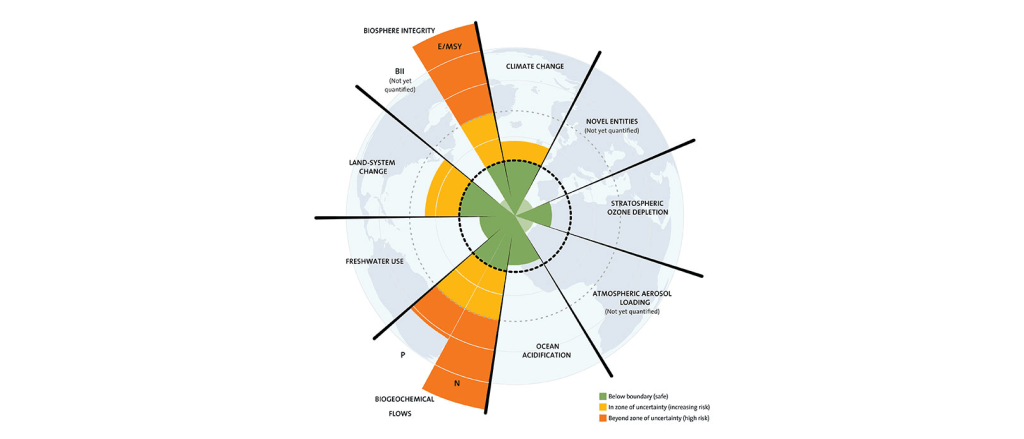
Our current economic model has already exceeded the Earth’s ecological limits and is endangering the stability of the ecosystem and the livelihoods of humankind.

Changes of 7 planetary boundaries since 1950. The green shaded polygon represents the safe operating space. Source: Steffen et al. 2015
Continue reading